Understanding Concussion Treatment
A concussion is a type of mild traumatic brain injury that can occur after a blow, bump, or sudden movement of the head or body. While many people recover without serious complications, concussion symptoms can sometimes affect daily activities, work, school, sleep, and exercise.

Understanding proper concussion treatment can help people manage symptoms and return to normal activities safely. Treatment is usually based on the person’s symptoms, medical history, age, and the circumstances of the injury rather than one single approach.
What Is a Concussion?
A concussion happens when an impact or sudden movement causes the brain to move rapidly inside the skull. This can temporarily affect normal brain function.
A person does not necessarily need to lose consciousness to have a concussion. Symptoms may appear immediately or develop later following the injury.
Concussions can happen during sports, falls, car accidents, workplace incidents, or other situations involving a sudden impact or movement.
Because head injuries can vary in severity, medical evaluation is important when a concussion is suspected.
Common Concussion Symptoms
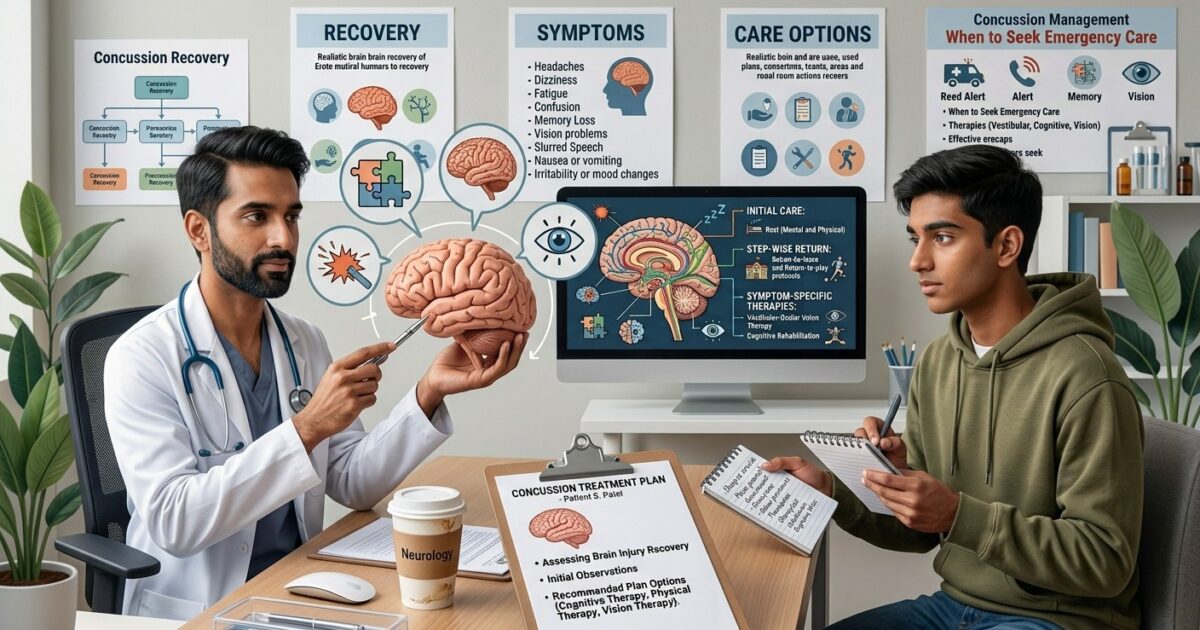
Concussion symptoms can affect physical, cognitive, emotional, and sleep-related functions. Some people experience only a few symptoms, while others may develop several.
Common symptoms include:
- Headache or pressure in the head
- Dizziness or balance problems
- Nausea
- Fatigue
- Sensitivity to light or sound
- Blurred vision
- Difficulty concentrating
- Memory problems
- Feeling mentally slowed or “foggy”
- Irritability or mood changes
- Changes in sleep
- Increased symptoms after physical or mental activity
Symptoms can change during recovery, so monitoring how they develop is important.
Concussion Treatment: What Does It Involve?
There is no single treatment that is appropriate for everyone. Concussion treatment generally focuses on managing symptoms and gradually returning to normal physical and mental activities.
Depending on the individual’s needs, treatment may involve:
- Medical assessment and symptom monitoring
- Appropriate physical and cognitive rest
- Gradual return to daily activities
- Management of headaches and other symptoms
- Sleep and lifestyle support
- Physical therapy
- Balance or vestibular rehabilitation
- Vision rehabilitation when appropriate
- Cognitive rehabilitation for persistent problems
The treatment plan should be adjusted according to the person’s symptoms and recovery progress.
Mild Concussion Treatment and Rest
For a mild concussion, healthcare professionals may recommend reducing activities that significantly worsen symptoms during the early stage of recovery.
This can include temporarily limiting strenuous exercise, taking breaks from demanding mental activities, and getting adequate sleep.
However, prolonged complete inactivity is not appropriate for everyone. Once the initial period has passed, a gradual return to normal activities is often encouraged when symptoms allow.
If an activity causes a significant increase in symptoms, the person may need to reduce the intensity or duration and progress more slowly.
Concussion Recovery and Returning to Daily Activities
Concussion recovery is different for every person. Some people improve relatively quickly, while others may experience symptoms for several weeks or longer.
Returning to school, work, exercise, and other activities should generally be gradual. Depending on symptoms, a person may initially need additional breaks, reduced workloads, or shorter periods of physical activity.
High-risk activities that could result in another head injury should be avoided until an appropriate healthcare professional says it is safe to return.
A gradual approach allows symptoms to be monitored while activity levels increase.
Concussion Rehabilitation for Persistent Symptoms
Most people recover from a concussion, but some continue to experience symptoms that interfere with daily life.
When symptoms persist, concussion rehabilitation may be considered. The type of rehabilitation depends on the symptoms.
For example, physical or vestibular therapy may be useful for certain balance and dizziness problems. Cognitive rehabilitation may be considered when concentration or other cognitive difficulties continue.
Some people may also require assessment or treatment for sleep problems, headaches, or vision-related symptoms.
A personalized rehabilitation plan focuses on the specific difficulties affecting the person’s recovery.
How Long Does Concussion Treatment Take?
There is no universal recovery timeline for concussion. The duration can depend on factors such as the severity of the injury, symptoms, previous head injuries, sleep, stress, and other individual circumstances.
Rather than expecting recovery to follow an exact schedule, it is useful to monitor whether symptoms are gradually improving and whether normal activities can be increased without significant worsening.
People with symptoms that do not improve or that interfere with everyday life should discuss their recovery with a healthcare professional.
Returning to Exercise After a Concussion
Physical activity should generally be reintroduced gradually after a concussion.
A person may begin with light activities and increase the intensity step by step as symptoms allow. Contact sports and other activities with a high risk of another head injury should be avoided until the person has been appropriately evaluated and cleared to return.
Trying to return to intense exercise too quickly can make recovery more difficult for some people.
Following individualized medical guidance is especially important for athletes and people whose work involves physical activity.
When Should You Seek Emergency Care?
Most concussions do not require emergency treatment, but certain symptoms after a head injury can indicate a more serious problem.
Seek urgent medical attention if a person develops:
- A severe or worsening headache
- Repeated vomiting
- Increasing confusion
- Seizures
- Significant weakness or numbness
- Difficulty waking or staying awake
- Slurred speech
- Major problems with coordination
- Unusual behavior
- A significant deterioration in symptoms
- Unequal pupils
These warning signs should not be ignored.
Lifestyle Habits That May Support Recovery
Healthy daily habits can support general recovery while following professional medical advice.
Getting consistent sleep, staying hydrated, eating balanced meals, and gradually returning to normal routines can be helpful.
Managing stress is also important. Excessive stress can make some symptoms feel more difficult to manage, so taking appropriate breaks and maintaining a manageable daily routine may support recovery.
It is also important to avoid activities that could lead to another head injury during the recovery period.
How Can Concussions Be Prevented?
Not every concussion can be prevented, but safety measures can reduce the risk of head injuries.
Depending on the activity, useful precautions may include wearing appropriate protective equipment, following sports safety rules, using seat belts, preventing falls, and maintaining safe environments.
Athletes should also follow appropriate return-to-play procedures after a suspected concussion instead of returning to contact activities immediately.
Why Individualized Concussion Care Matters
Every concussion is different. One person may primarily experience headaches, while another may have dizziness, concentration difficulties, sleep changes, or balance problems.
For this reason, concussion treatment should focus on the individual’s symptoms and recovery needs.
A healthcare professional can help determine whether additional assessment, monitoring, or rehabilitation is appropriate and can provide guidance on safely increasing daily activities.
Final Thoughts
Effective concussion treatment focuses on appropriate medical assessment, symptom management, gradual return to normal activities, and rehabilitation when persistent symptoms require additional support.
Understanding concussion symptoms and recognizing warning signs can help people respond appropriately after a head injury. Anyone experiencing severe, worsening, or persistent symptoms should seek professional medical advice rather than attempting to manage the injury alone.
With appropriate care and a gradual recovery plan, many people are able to return to their usual activities after a concussion.Readmore Blogs