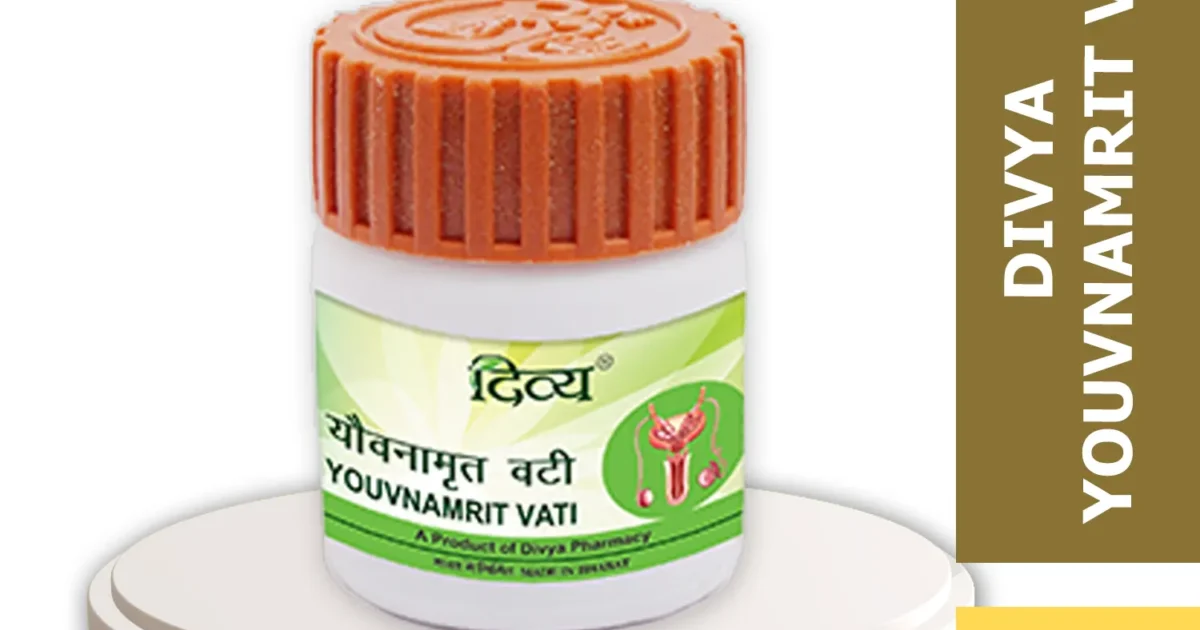
People often search for Patanjali Youvnamrit Vati ingredients before buying the product. They want to know what the tablets contain and why Ayurveda uses these ingredients.

Patanjali Youvnamrit Vati combines several herbs with traditional Ayurvedic preparations. The current Patanjali product information lists Ashwagandha, Shuddha Konch, Satavar, Safed Musli, Javitri, Jaiphal, Shuddh Kuchla, Akarkara, Swarn Bhasma, Praval Pishti, Vang Bhasma, Shuddh Shilajit, and Pan Ras among its key ingredients.
In this guide, we will look at each ingredient and explain its traditional Ayurvedic role in simple language.
Note: Product formulations and labels can change. Always check the ingredient list on the latest pack before use.
What Is Patanjali Youvnamrit Vati?
Patanjali Youvnamrit Vati is an Ayurvedic tablet formulation from Divya Pharmacy, a Patanjali group company. The formulation combines herbs, purified ingredients, and traditional Ayurvedic preparations.
The name Youvnamrit relates to the traditional idea of youthfulness and vitality. People therefore often explore this formulation as part of a vitality-focused Ayurvedic routine.
The current Patanjali product information also advises users to take the product under medical supervision. This point becomes especially important because the formulation contains ingredients such as Shuddh Kuchla and various bhasma preparations.
Patanjali Youvnamrit Vati Ingredients List
The current product information lists the following ingredients:
| Ingredient | Botanical or Traditional Name |
|---|---|
| Ashwagandha | Withania somnifera |
| Shuddha Konch | Mucuna pruriens |
| Satavar | Asparagus racemosus |
| Safed Musli | Chlorophytum arundinaceum |
| Javitri | Myristica fragrans |
| Jaiphal | Myristica fragrans |
| Shuddh Kuchla | Strychnos nux-vomica |
| Akarkara | Anacyclus pyrethrum |
| Swarn Bhasma | Traditional Ayurvedic gold preparation |
| Praval Pishti | Traditional coral preparation |
| Vang Bhasma | Traditional Ayurvedic tin preparation |
| Shuddh Shilajit | Purified Shilajit |
| Pan Ras | Piper betle |
The current manufacturer information provides the main ingredient list. However, packaging can change, so check your product label for the latest details.
1. Ashwagandha
Ashwagandha remains one of the most familiar herbs in Ayurveda. Traditional Ayurvedic practices associate it with strength, nourishment, vitality, and general wellness.
The herb appears in many Ayurvedic formulations. People commonly include Ashwagandha-based products in routines focused on maintaining physical well-being.
In Youvnamrit Vati, Ashwagandha works as one component of a broader multi-ingredient formula.
2. Shuddha Konch
Shuddha Konch comes from Mucuna pruriens. Ayurvedic practitioners traditionally use Konch in various formulations.
The word Shuddha indicates that the ingredient undergoes a purification process before traditional Ayurvedic use.
Because the formulation contains several concentrated ingredients, users should follow the product directions rather than experimenting with the dosage.
3. Satavar
Satavar, commonly known as Shatavari, comes from Asparagus racemosus.
Ayurveda traditionally values Shatavari for its nourishing properties. Traditional formulations often include it in preparations associated with general vitality and nourishment.
Its presence adds another herbal component to the Youvnamrit Vati formula.
4. Safed Musli
Safed Musli traditionally refers to Chlorophytum arundinaceum.
Ayurvedic traditions associate this herb with nourishment, strength, and vitality. Various traditional formulations use Safed Musli as part of wellness-focused preparations.
Youvnamrit Vati combines Safed Musli with several other herbs and traditional ingredients.
5. Javitri
Javitri refers to mace, the outer covering of the nutmeg seed. It comes from Myristica fragrans.
Traditional Ayurvedic practices use Javitri for its aromatic and warming qualities. It also appears in several classical formulations.
Youvnamrit Vati includes Javitri along with Jaiphal, which comes from the same plant.
6. Jaiphal
Jaiphal means nutmeg. It also comes from Myristica fragrans.
People commonly know nutmeg as a culinary spice. Ayurveda also uses it in traditional formulations.
Jaiphal contributes its characteristic aromatic and warming properties to the overall ingredient profile.
However, concentrated amounts differ from ordinary culinary use. Therefore, users should follow the product’s recommended directions.
7. Shuddh Kuchla
Shuddh Kuchla refers to purified Strychnos nux-vomica.
This ingredient requires special attention. Nux-vomica naturally contains compounds that can cause serious toxicity when people use inappropriate amounts.
Traditional Ayurvedic preparation therefore involves purification and processing. Users should not treat Shuddh Kuchla like an ordinary food ingredient.
Patanjali’s current product information advises taking Youvnamrit Vati under medical supervision. People should follow that guidance carefully.
8. Akarkara
Akarkara comes from Anacyclus pyrethrum.
Ayurvedic traditions have used Akarkara in various formulations for many years. Traditional texts associate the herb with warming and stimulating properties.
Its inclusion adds another traditional botanical ingredient to the Youvnamrit Vati formula.
9. Swarn Bhasma
Swarn Bhasma refers to a traditional Ayurvedic preparation involving gold.
Ayurvedic practitioners prepare bhasma through specific traditional processing methods. Therefore, Swarn Bhasma differs from ordinary metallic gold or a conventional dietary mineral.
The current Youvnamrit Vati ingredient list includes Swarn Bhasma.
Because the formulation contains a bhasma preparation, users should follow professional guidance and the manufacturer’s directions.
10. Praval Pishti
Praval Pishti represents a traditional Ayurvedic preparation associated with coral.
Traditional Ayurvedic practitioners process Praval before including it in specific formulations. Its use therefore differs from simply consuming raw coral.
Patanjali lists Praval Pishti among the ingredients of Youvnamrit Vati.
11. Vang Bhasma
Vang Bhasma represents another traditional Ayurvedic preparation. Traditional Ayurvedic methods process the ingredient before practitioners use it in formulations.
Patanjali includes Vang Bhasma in the current Youvnamrit Vati ingredient profile.
Since bhasma preparations require specific processing, consumers should use products containing them according to professional and manufacturer guidance.
12. Shuddh Shilajit
Shuddh Shilajit means purified Shilajit.
Ayurveda has a long history of using Shilajit in traditional vitality and rejuvenation-oriented formulations. Many Ayurvedic products contain purified Shilajit as one of their key ingredients.
Youvnamrit Vati combines Shuddh Shilajit with several herbs and other traditional preparations.
13. Pan Ras
Pan Ras refers to the juice associated with betel leaf, Piper betle.
Traditional Ayurvedic formulations sometimes use plant juices during the preparation process. Pan Ras appears in the current ingredient information for Youvnamrit Vati.
Its inclusion further demonstrates the multi-ingredient nature of the formulation.
Why Does Patanjali Youvnamrit Vati Contain So Many Ingredients?
Ayurvedic formulations often combine several ingredients instead of relying on one herb.
Each ingredient has its own traditional properties. Ayurvedic practitioners select and combine ingredients according to traditional formulation principles.
Youvnamrit Vati includes:
- Herbal ingredients
- Roots and seeds
- Purified plant ingredients
- Shilajit
- Bhasma preparations
- Pishti preparation
- Traditional plant juice
This combination creates a formulation with a broader ingredient profile than a single-herb supplement.
Patanjali Youvnamrit Vati Ingredients and Ayurveda
Ayurveda takes a holistic approach to wellness. Traditional Ayurvedic practices consider factors such as diet, lifestyle, sleep, activity, age, and individual constitution.
The ingredients in Youvnamrit Vati reflect this traditional approach.
Ashwagandha, Shatavari, Safed Musli, Konch, and Shilajit commonly appear in Ayurvedic discussions about vitality and nourishment. Other ingredients, such as Shuddh Kuchla and bhasma preparations, require more careful handling.
For this reason, consumers should not choose the product based on one ingredient alone. Instead, they should consider the complete formulation and their individual requirements.
Are Patanjali Youvnamrit Vati Ingredients Herbal?
Not all of them.
The formulation contains several herbal ingredients, including Ashwagandha, Konch, Shatavari, Safed Musli, Javitri, Jaiphal, and Akarkara.
However, it also contains traditional preparations such as:
- Swarn Bhasma
- Praval Pishti
- Vang Bhasma
- Shuddh Shilajit
Therefore, Youvnamrit Vati is better described as a multi-ingredient Ayurvedic formulation rather than a simple herbal supplement.
How to Check the Ingredients Before Buying
Before purchasing Patanjali Youvnamrit Vati, take a few simple steps.
Check the Current Label
Always read the ingredient panel on the latest packaging.
Check the Product Seal
Make sure the packaging looks intact and properly sealed.
Check the Expiry Date
Look at the manufacturing and expiry details before purchasing or using the product.
Check the Directions
Read the recommended dosage and usage instructions carefully.
Consider Your Individual Needs
If you take medicines or manage an existing health condition, speak with a qualified professional before using the product.
How to Take Patanjali Youvnamrit Vati?
The manufacturer provides dosage instructions with the product. The current Patanjali product information recommends 1–2 tablets twice daily with water or milk, or as directed by a physician.
The same product information advises users to take the product under medical supervision.
Do not increase the quantity because you expect faster results. Follow the latest instructions on the package you purchase.
If you take other medicines or supplements, ask a qualified healthcare professional about suitable timing and combinations.
Who Should Take Precautions?
Some people should seek professional advice before using an Ayurvedic formulation containing multiple active ingredients.
This includes:
- Pregnant women
- Breastfeeding women
- Children
- Older adults taking several medicines
- People with existing health conditions
- People with known allergies
- People who regularly take prescription medicines
A qualified Ayurvedic practitioner or healthcare professional can help determine whether the formulation suits your individual situation.
Where to Buy Patanjali Youvnamrit Vati Online?
If you want to buy Patanjali Youvnamrit Vati online, you can check Ayurveda Holic for current product availability and details.
Before placing an order, check the product name, pack size, price, expiry date, packaging, and seller information.
Buying from a reliable source also helps you verify the product details before use.
Frequently Asked Questions
What are the main Patanjali Youvnamrit Vati ingredients?
The current ingredient list includes Ashwagandha, Shuddha Konch, Satavar, Safed Musli, Javitri, Jaiphal, Shuddh Kuchla, Akarkara, Swarn Bhasma, Praval Pishti, Vang Bhasma, Shuddh Shilajit, and Pan Ras.
Does Patanjali Youvnamrit Vati contain Ashwagandha?
Yes. Ashwagandha forms part of the current Youvnamrit Vati formulation.
Does Youvnamrit Vati contain Shilajit?
Yes. The formulation includes Shuddh Shilajit, or purified Shilajit.
Does Patanjali Youvnamrit Vati contain Swarn Bhasma?
Yes. Swarn Bhasma appears in the current ingredient information.
Does Youvnamrit Vati contain Shuddh Kuchla?
Yes. Shuddh Kuchla appears among the listed ingredients. Because Strychnos nux-vomica contains potentially toxic compounds, users should follow the manufacturer’s directions and seek professional guidance.
Is Patanjali Youvnamrit Vati a herbal product?
It contains several herbs, but it also contains traditional Ayurvedic preparations such as Swarn Bhasma, Praval Pishti, and Vang Bhasma. Therefore, it is more accurate to describe it as a multi-ingredient Ayurvedic formulation.
Can I take Youvnamrit Vati without professional advice?
The current Patanjali product information recommends taking Youvnamrit Vati under medical supervision. Follow that recommendation, especially because the formulation contains several ingredients that require careful use.
Final Thoughts
Understanding Patanjali Youvnamrit Vati ingredients can help you make a more informed purchasing decision.
The formulation combines familiar Ayurvedic herbs such as Ashwagandha, Shatavari, Safed Musli, Konch, and Akarkara with Shilajit and traditional bhasma and pishti preparations.
Each ingredient has its own traditional background. However, you should consider the complete formulation rather than focusing on one ingredient alone.
Always check the latest product label, follow the recommended directions, and seek professional guidance when needed. This approach helps you use an Ayurvedic formulation responsibly and according to its intended traditional context.